PFD
How far a glider can realistically fly that day.
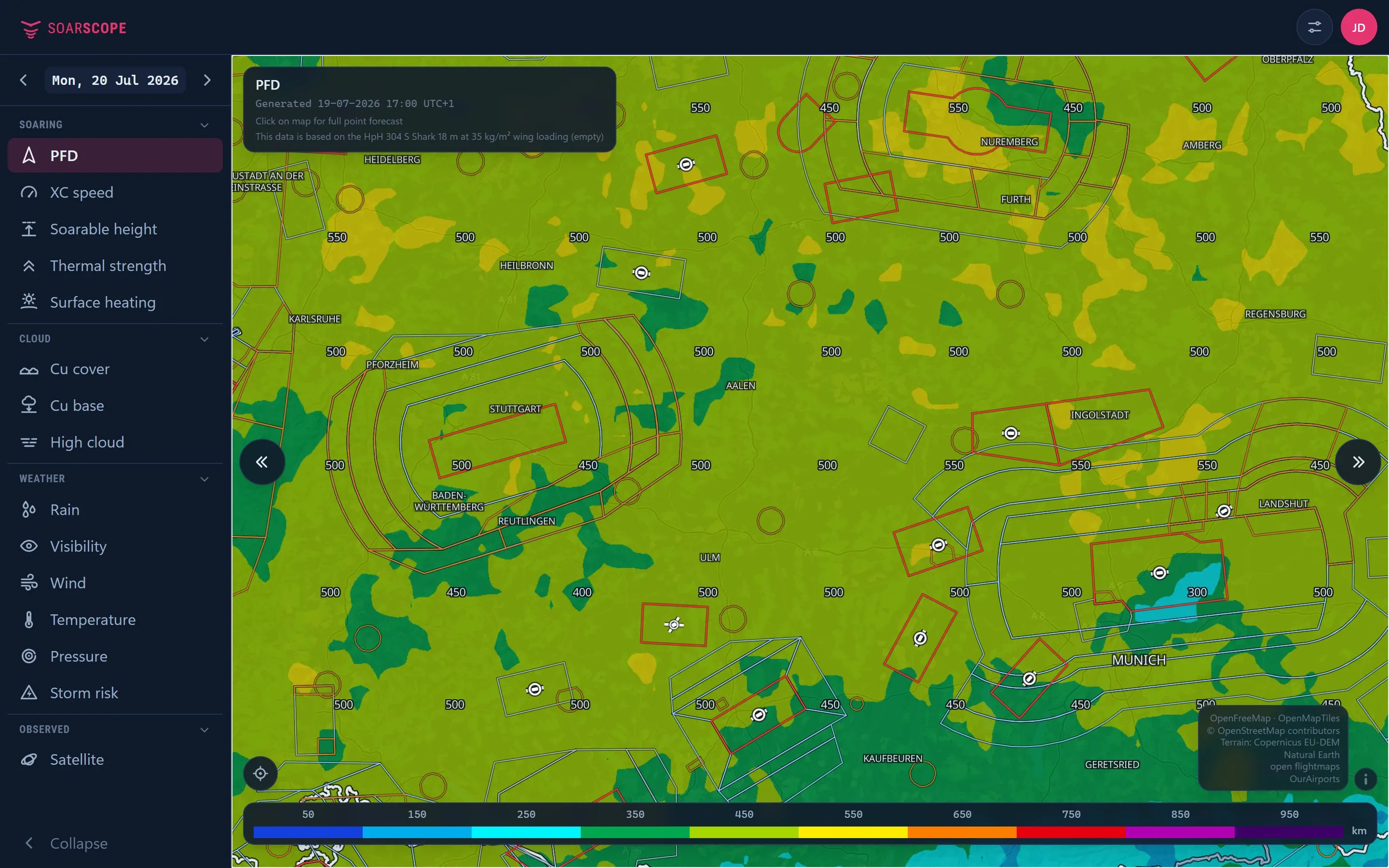
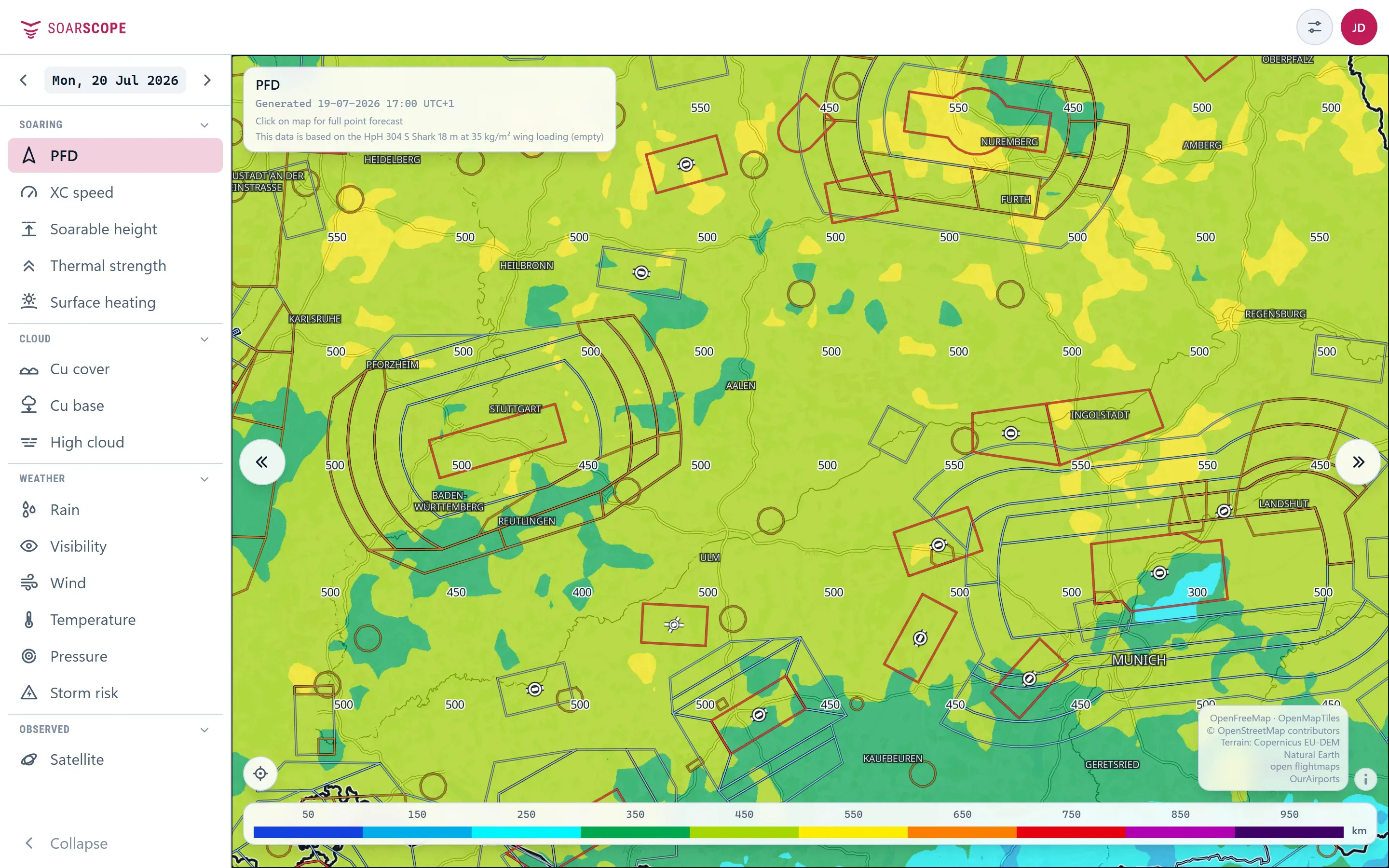
PFD stands for potential flight distance: how far a glider can realistically fly that day on the thermals the forecast expects, starting from that place.
How to read it
Section titled “How to read it”Higher is better. A high PFD needs several things at once: good climbs, a deep working height, enough hours of it in a row, and little to slow you down. A blue area is a day to stay home; the further the colours go up the scale, the more the day has to offer.
PFD is one number for the whole day. To see when the good hours are, switch to XC speed and move the hour slider.
What goes into it
Section titled “What goes into it”PFD follows the day hour by hour: how fast you could fly cross-country in each hour (see Cross-country speed and distance), and how many good hours the day strings together. A day with only a single good hour here and there is a local soaring day, not a distance, and shows as such. The air near the sea and large lakes is often more stable, and the forecast takes that into account.
PFD is worked out for your glider and wing loading. See Choosing a glider.
Confidence
Section titled “Confidence”Each place carries a confidence word in the point forecast: reliable, provisional or speculative. See Confidence.